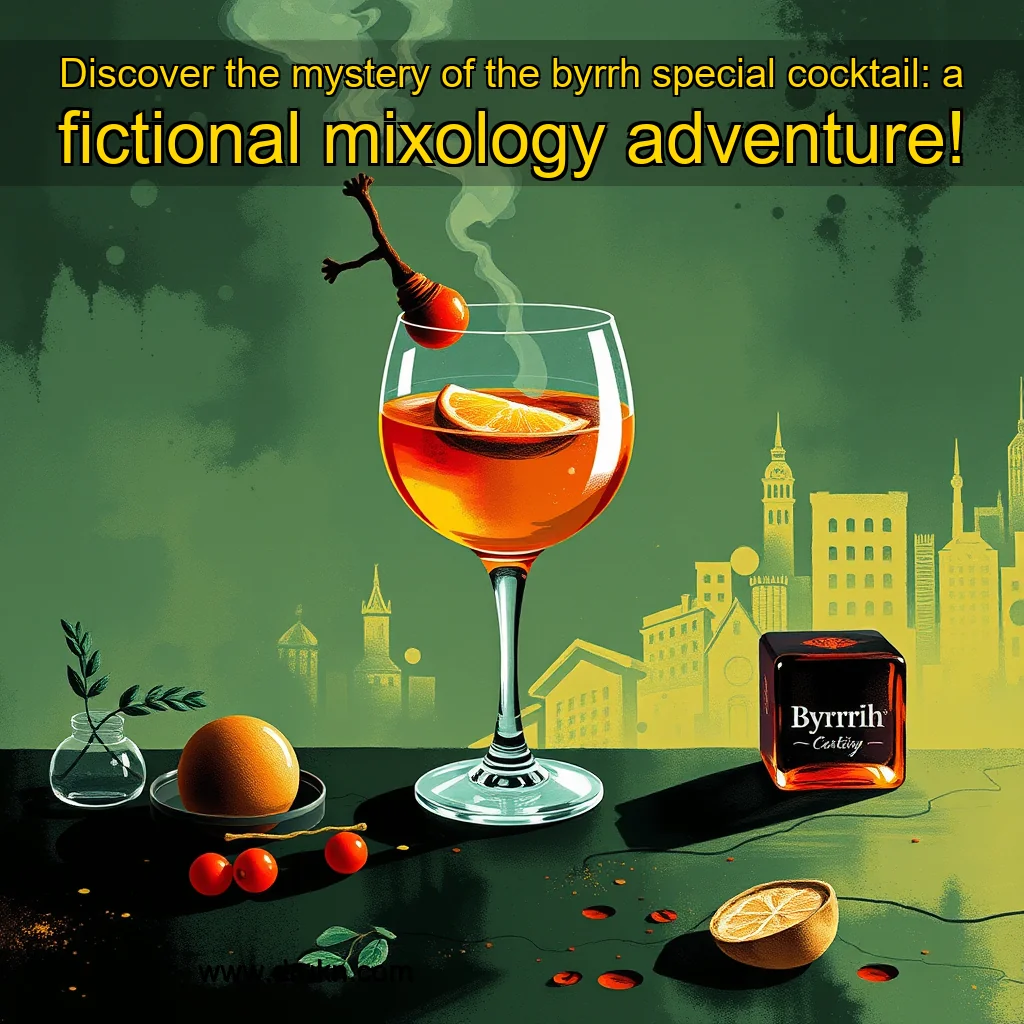
The Byrrh Quinquina Cocktail: A Study in Contrasts
The Byrrh Quinquina is a classic cocktail that has been around since the 19th century. Its unique flavour profile, which combines sweet and bitter notes, makes it a fascinating subject for experimentation. In this article, we’ll delve into the world of Byrrh Quinquina and explore two different versions of this cocktail, each made with a different Old Tom Gin.
The Original Recipe
The original Byrrh Quinquina recipe, as described in Jerry Thomas’s 1862 book “The Bartender’s Guide,” calls for 1 1/2 ounces of Byrrh Quinquina, 1/2 ounce of sweet vermouth, and a dash of bitters. This simple recipe showcases the drink’s unique flavour profile, with the sweet vermouth balancing out the bitter notes of the Byrrh Quinquina.
The First Experiment: Byrrh Quinquina with Plymouth Gin
For our first experiment, we’ll substitute the Old Tom Gin with Plymouth Gin. Plymouth Gin is a classic English gin that is known for its juniper-forward flavour profile. When paired with the Byrrh Quinquina, the juniper notes take centre stage, and the drink becomes more juniper-forward than bitter. Key characteristics of this version: + Juniper-forward flavour profile + Less bitter than the original recipe + More citrus notes due to the Plymouth Gin’s citrus-forward flavour profile
The Second Experiment: Byrrh Quinquina with Hendrick’s Gin
For our second experiment, we’ll substitute the Old Tom Gin with Hendrick’s Gin.
Byrrh Grand Quinquina was one of the recipes included in the book.
The Origins of Byrrh Grand Quinquina
Byrrh Grand Quinquina is a unique and complex wine that has been around for over a century. Its origins date back to the late 19th century when the Byrrh company was founded in France. The company’s name is derived from the French word “byrrh,” which refers to the chichona bark used in the production of the wine.
Byrrh Grand Quinquina is a type of fortified wine that originated in France. It is made from a blend of 15 different herbs and botanicals, including gentian, rhubarb, and licorice root.
learn more

news is a contributor at Drukn. We are committed to providing well-researched, accurate, and valuable content to our readers.